


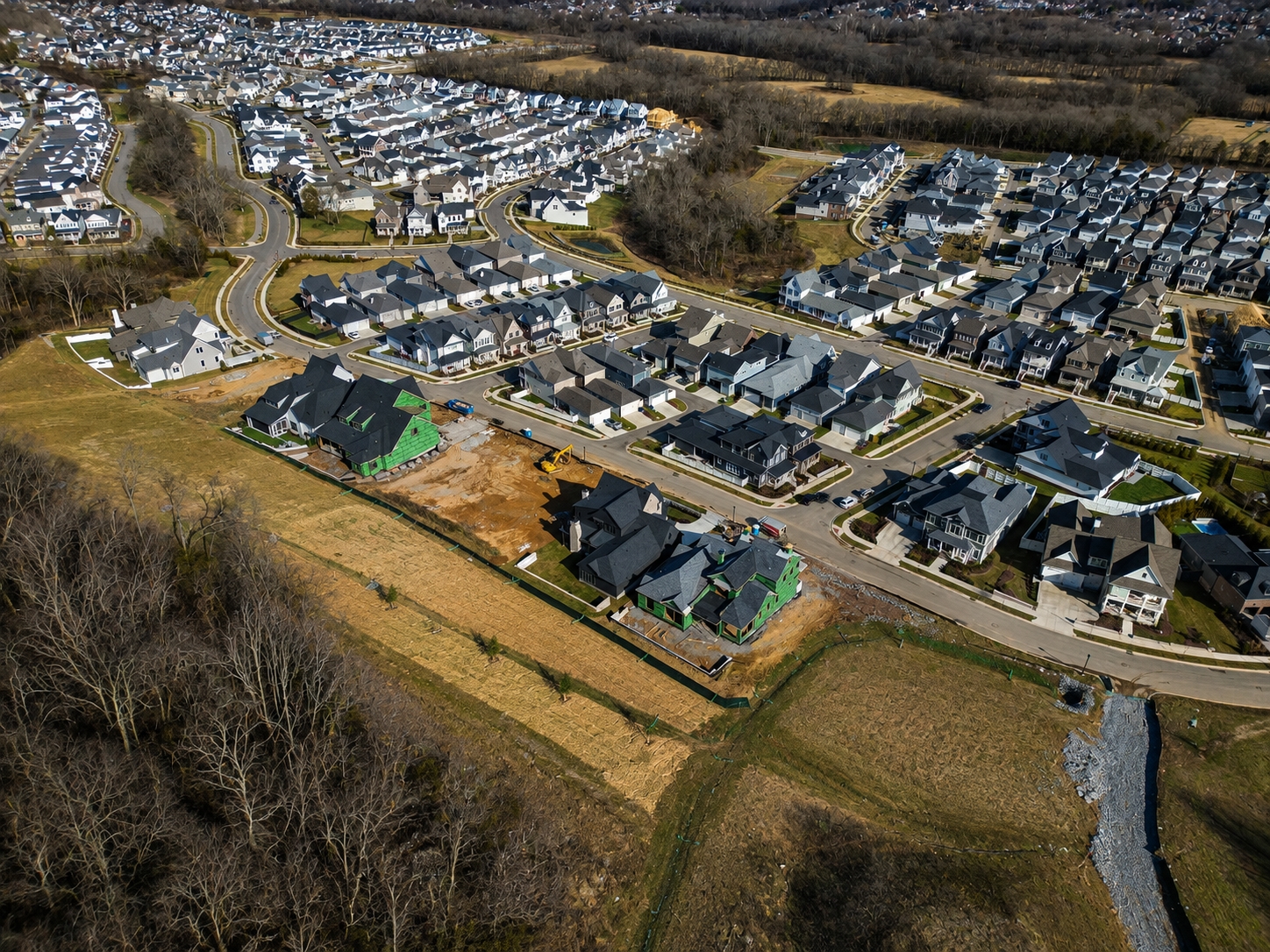
The Fed's first hike since 2023 pushed the 30-year fixed past 7.2% in a week. Here's what that does to a market that was already stalling.
KEY TAKEAWAY
The Fed raised rates to 3.75%–4.00% on Sept 11, its first hike since 2023, and 30-year mortgage rates jumped to 7.23% by Sept 25, up 16 basis points in a week and well past the 6.25%–6.75% range we forecasted three days earlier. Middle Tennessee's months-of-supply hit 5.59, the highest on record for this data series, while closings fell 14% year-over-year.
On Tuesday, we published a piece telling Middle Tennessee buyers that mortgage rates had "finally stopped climbing" and would likely hold in the 6.25% to 6.75% range through the end of the year. That forecast was accurate when we wrote it. It is not accurate anymore.
On September 11, the Federal Reserve raised its benchmark rate by a quarter point, to a target range of 3.75% to 4.00%. It was the Fed's first rate hike since 2023, and it caught a lot of the market off guard. Most of 2026's conversation had been about when rates would come down, not go up. Mortgage rates didn't wait to react. By September 25, the 30-year fixed had climbed to 7.23% on an intraday basis, according to Mortgage News Daily, up roughly 16 basis points in a single week for both 30-year and 15-year loans.
That's not a rounding error. It's the difference between a market that had quietly handed leverage back to buyers, and one where the math on that leverage just changed.
Quick answer: The Fed raised rates to 3.75%–4.00% on September 11, 2026, its first hike since 2023, and 30-year mortgage rates jumped to roughly 7.23% by September 25, up 16 basis points in a week. Middle Tennessee's housing inventory was already at its loosest point in years, so the rate spike lands on a market that has less room to absorb it than it did in 2023 or 2024.

LOCAL INSIGHT
Middle Tennessee's inventory conditions aren't uniform even within this rate environment: Davidson County is running the loosest at 6.89 months of supply, while Robertson County remains the tightest at 4.17, a reminder that a metro-wide rate story still plays out differently county by county.
What the Fed Actually Did, and Why
The Fed's move wasn't a surprise reaction to a single bad data point. Inflation has stayed "elevated" at 3.4% year-over-year as of August, well above the Fed's 2% target, while unemployment has held steady at 4.1%. That combination, inflation not cooperating but the labor market not breaking either, gave the Fed room to prioritize price stability over growth. Fed officials' own projections put the median expected rate around 4.1% by the end of 2026, which reads as a signal that at least one more hike is still on the table this year. The next scheduled meeting is October 27–28.
For anyone watching the Fed funds rate expecting it to translate directly into a mortgage number, it doesn't work that cleanly. But the relationship is real. When the Fed raises its benchmark rate, banks generally follow by raising rates on mortgages and other consumer lending, and that's exactly what happened here, fast.
The bidding wars didn't come back because rates went up. They stayed gone. Buyers are just doing the math more carefully now.
How Fast the Number Actually Moved
Freddie Mac's weekly average, which lags real-time market movement by design, still showed 6.76% for the week ending September 10, the day before the Fed's announcement. Within two weeks, the 30-year conventional rate on a daily tracker had climbed to 7.229%, with the 15-year following it up to 6.477%. Mike Fratantoni, chief economist at the Mortgage Bankers Association, put it plainly: mortgage rates "had vaulted higher," and the association is already seeing borrowers shift toward adjustable-rate mortgages as a way to soften the hit on a monthly payment.
That shift matters. An ARM buys short-term relief in exchange for rate risk down the road, and it's the kind of move borrowers usually only make when the fixed-rate number has moved enough to change what they can afford.
Quick Stats
7.23%
30-year fixed mortgage rate, intraday, as of September 25, 2026
+16 bps
Week-over-week increase in both 30-year and 15-year rates
5.59 Months
Year-over-year drop in Middle Tennessee closings this August, the weakest in three years
-14%
Months of housing supply across Middle Tennessee, the highest in this data series
A Market That Was Already Stalling, Not Surging
Here's what makes the timing worse: Middle Tennessee's housing market wasn't in a position to shrug this off. Grant Hammond's August data for the region shows active inventory up 10% year-over-year to an average of 14,294 homes, and months of supply at 5.59, the highest reading in this data series and the first time it's crossed the 5-month mark. Closings fell 14% to 3,003, the weakest August in three years, while new listings dropped 18%. The median sale price held essentially flat at $450,000, but the average sale price rose 3% to $637,141, appreciation concentrating at the top of the market rather than spreading across it.
Put simply: this wasn't a hot market that could absorb a rate shock without much changing. It was already a market with more sellers waiting on the sidelines and more buyers taking their time, and a sudden 40-plus basis point move on top of that tends to push both sides further into "wait and see."
BEST FOR
Buyers with an offer already in progress who need to decide whether to lock or float, and sellers in counties with looser inventory (Davidson, for instance, at 6.89 months of supply) who are pricing a home that's likely to sit past 30 days.
What Buyers and Sellers Should Actually Do With This
If you're a buyer with a contract already in progress, this is the week to talk to your lender about locking, not floating. Rates moved 16 basis points in seven days; there's no guarantee the next seven look calmer, especially with an October Fed meeting on the calendar and officials signaling they aren't done. If you're still shopping, run your numbers at the current rate, not last month's, before you fall in love with a monthly payment that assumed 6.5%.
If you're selling, the leverage math shifts too. Homes were already sitting 34 days on average before going under contract, up from 33 a year ago, and list-to-contract time has stretched to 59 days. A buyer pool that's absorbing a real rate increase is a buyer pool that negotiates harder on price and repairs, not less. Pricing realistically from day one, not testing the market high and planning to come down, matters more with every basis point rates climb.
TIP
If you're under contract, ask your lender about a rate-lock extension or float-down option this week. A move like the one we just saw can eat a rate lock's cushion fast.
The Bottom Line
The story from three days ago (rising inventory, longer days on market, buyers gaining room to negotiate) is still true. What's changed is the rate number underneath it, and it changed fast enough that a forecast written on Monday was already out of date by Friday. That's not a reason to panic. It's a reason to work with numbers from this week, not last week, whichever side of the transaction you're on.
Frequently Asked Questions
Why did mortgage rates go up if the Fed usually cuts rates to help the economy? The Fed raises rates to fight inflation, which was still running at 3.4% year-over-year in August, well above its 2% target. With unemployment steady at 4.1%, the Fed had room to prioritize inflation over stimulating growth.
Will rates keep rising through the rest of 2026? The Fed's own projections put the median expected rate around 4.1% by year-end, which several analysts read as signaling at least one more hike before December. The next Fed meeting is October 27–28.
Does a rate spike like this change Middle Tennessee's buyer's-market shift? Not the underlying inventory picture. Months of supply is still at a series-high 5.59, but it raises the cost of financing on top of that inventory, which can offset some of the negotiating room buyers had gained.
Should I lock my mortgage rate right now? That's a conversation for your specific lender and timeline, but with a 16-basis-point move happening in a single week, buyers under contract have less to gain from floating than they did a month ago.