

The craft decisions, sequencing, pacing, sound, that separate a video that gets watched from one that gets scrolled past.
KEY TAKEAWAY
The best real estate walkthrough videos open with a hook in the first five seconds, move through a property the way a real buyer would walk it rather than room by room off a floor plan, and end on the space that made the property worth showing in the first place, not the laundry room.
The First Five Seconds Decide Everything
Most people scrolling a feed decide whether to keep watching within the first five seconds, and a lot of real estate video wastes that window on a static wide shot of the front door with a slow zoom. It's not wrong exactly, it's just not a hook. A stronger open pairs a striking visual, a slow push through an entryway, a reveal of a view, with one specific, concrete detail about the property, not a generic line about location or square footage.
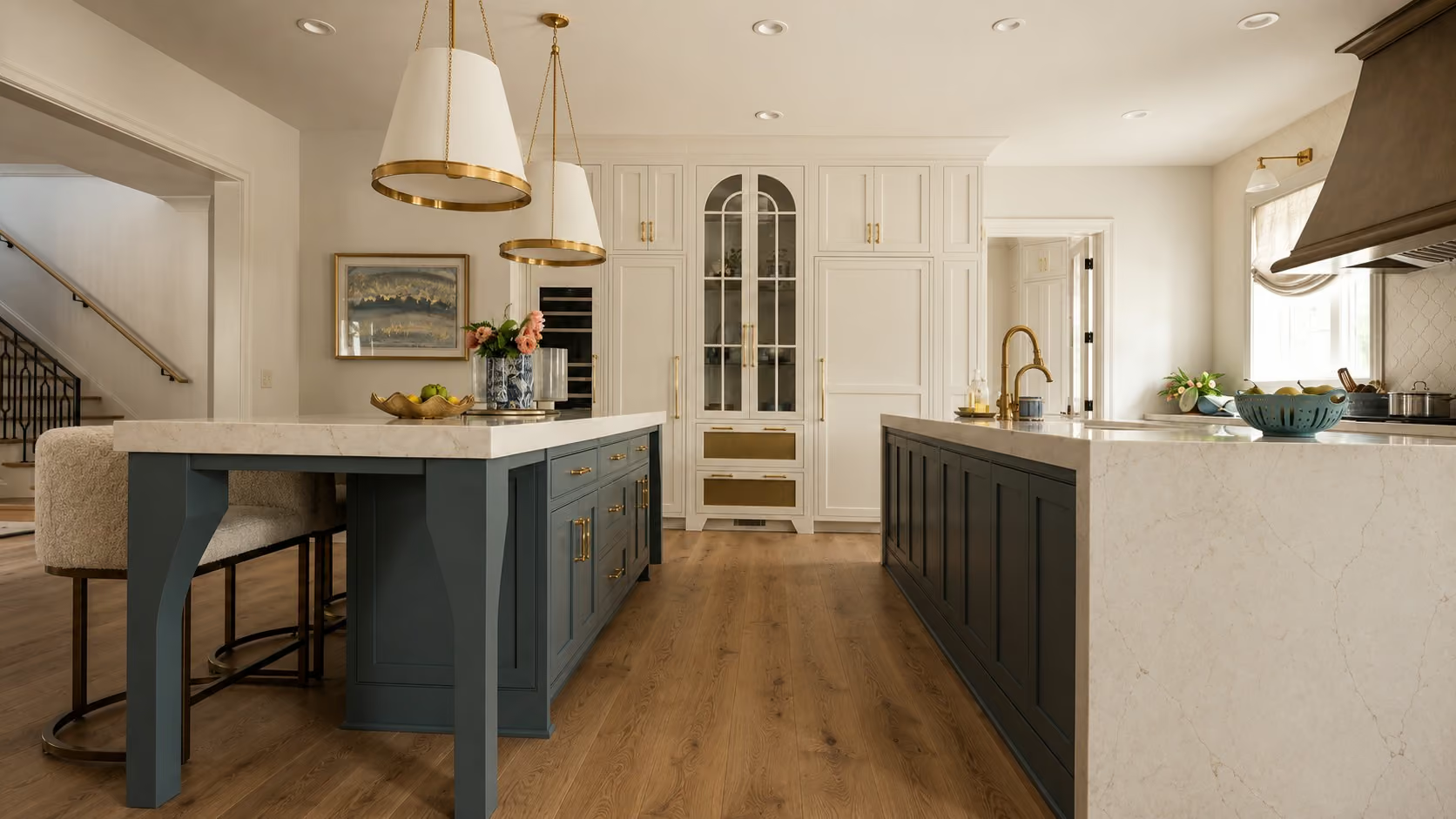
What works is specificity. 'The kitchen island seats six' does more in five seconds than 'welcome to this beautiful home' ever will.

LOCAL INSIGHT
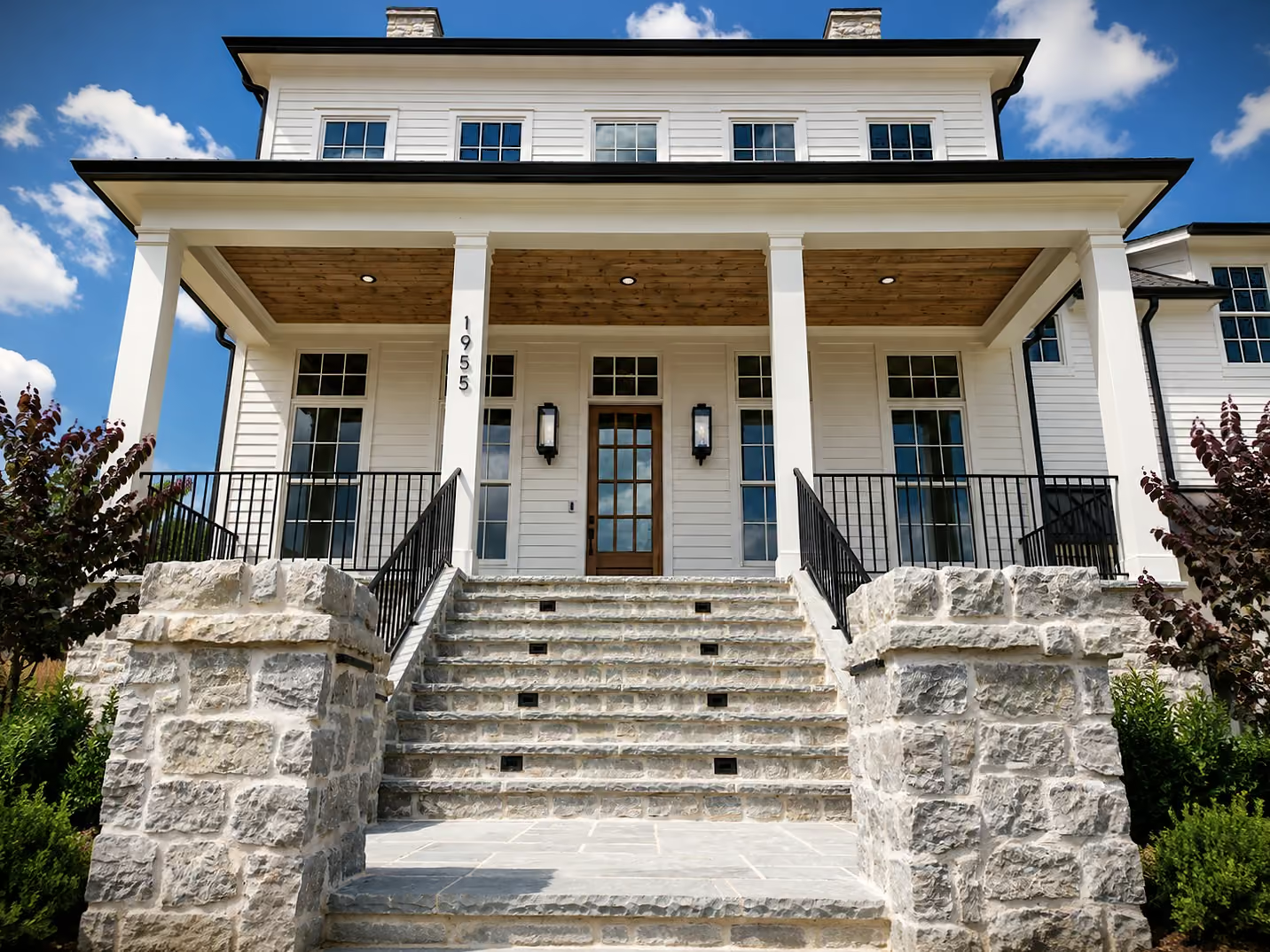
Middle Tennessee's rolling terrain and wraparound porches change the pacing question, a home with a hillside view or a long front porch often deserves a slower, more deliberate move than a straightforward suburban floor plan.
Walk It Like a Buyer Would, Not Like a Checklist
A lot of walkthrough video moves room to room in whatever order is easiest to shoot, front door, living room, kitchen, down the hall, bedroom by bedroom, laundry room last. That's a checklist, not a story, and buyers can feel the difference even if they couldn't explain why.
A better sequence follows how someone would actually move through the house on a real visit, and lingers on the rooms that do the most emotional work, a kitchen with real natural light, a primary suite, a porch with a view, rather than treating every room as equal screen time. Smooth gimbal movement through transitions, rather than a cut-cut-cut sequence of static shots, is what makes that feel like one continuous experience instead of a slideshow with motion.
A walkthrough video should feel like someone who actually knows the house is showing it to you, not like a drone flew through it.
Where 3D Tours and Walkthrough Video Actually Differ
These get treated as competing products, and they're not. A walkthrough video is a guided experience, the viewer sees only what's shown them, in the order it's shown. A 3D or 360 tour hands control to the viewer, letting them explore at their own pace, which matters most for remote or out-of-state buyers who need to understand a layout before ever booking a flight to see it in person.
The strongest listing packages use both, video for the emotional pull that gets someone to care about a property, 3D for the buyer who's already interested and wants to understand the space on their own terms.
Quick Stats
The Hook Window
A strong walkthrough opens with a hook in the first five seconds, a striking visual paired with one specific, concrete detail about the property, not a generic intro.
Viewer Control
Walkthrough video is a guided experience, the viewer sees only what's shown them, while 3D and 360 tours are buyer-controlled, which is why the strongest listings pair both rather than picking one.
Retention
Real estate video in 2026 is a hybrid: cinematic walkthrough for emotional pull, interactive 3D and 360 for remote buyers who need to explore at their own pace.
Format
Property videos under 60 seconds generate 2.5x more social shares than longer-form content, which is why sequencing inside that short window matters more than total runtime.
Sound Is Half the Video
Music pacing should match camera movement, a slow push through a room needs a different track than a quick cut between spaces, and generic royalty-free music that sounds like it's been used in a thousand other listing videos undercuts a property that's actually worth showing well. A brief moment of near-silence, a pause on a view or a quiet room, can do more than a swelling track layered under every second of footage.
This is one of the more overlooked pieces of a walkthrough video, and one of the easiest to get right once you're paying attention to it.
BEST FOR
Agents and sellers who want to understand what separates an effective walkthrough video from generic listing footage.
Ending on the Right Room
A walkthrough shouldn't just end wherever the last room happens to be. It should end on whatever made the property worth showing in the first place, a view, a primary suite, an outdoor living space, a kitchen that's the actual reason a buyer would want to see it in person. Ending on a laundry room or a garage because that's the last stop on the floor plan wastes the one moment in the video that sticks with a viewer longest.
TIP
If a room doesn't earn more than a few seconds of screen time on a real walkthrough, it probably doesn't need its own dedicated shot in the video either.
This Is Craft, Not a Formula
None of this is a template that gets applied identically to every property. A five-acre farm and a downtown condo don't call for the same pacing, the same music, or the same closing shot. What stays consistent is the underlying idea: walk the space the way a person would, show the parts that matter longer than the parts that don't, and end on the reason the property is worth seeing.
What's the difference between a walkthrough video and a 3D tour?
A walkthrough video is guided, the viewer sees only what's shown them in the order it's shown. A 3D or 360 tour lets the viewer explore at their own pace. They do different jobs, and the strongest listings use both rather than picking one.
How long should a real estate walkthrough video be?
Shorter than most agents assume. Property videos under 60 seconds generate significantly more shares than longer-form content, which means the sequencing inside that short window matters more than total runtime.
Does every room need to be included in the walkthrough?
No. Rooms that do the emotional work, a kitchen with real light, a primary suite, a view, deserve more screen time than a hallway or laundry room. Treating every room as equal length makes a video feel like a checklist instead of a story.
Why does the order of rooms in a video matter?
Because buyers can feel the difference between a video that moves the way a person would actually walk a house and one that just follows the floor plan. A checklist order reads as generic even when the footage itself is good.
Should walkthrough videos have music?
Usually yes, but it should match the pacing of the camera movement rather than run as generic background noise. A brief quiet moment on a strong shot can do more than music playing under every second of footage.